10 Jun 2026
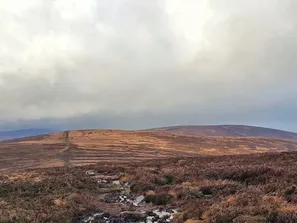
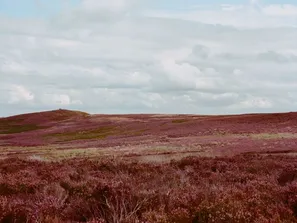
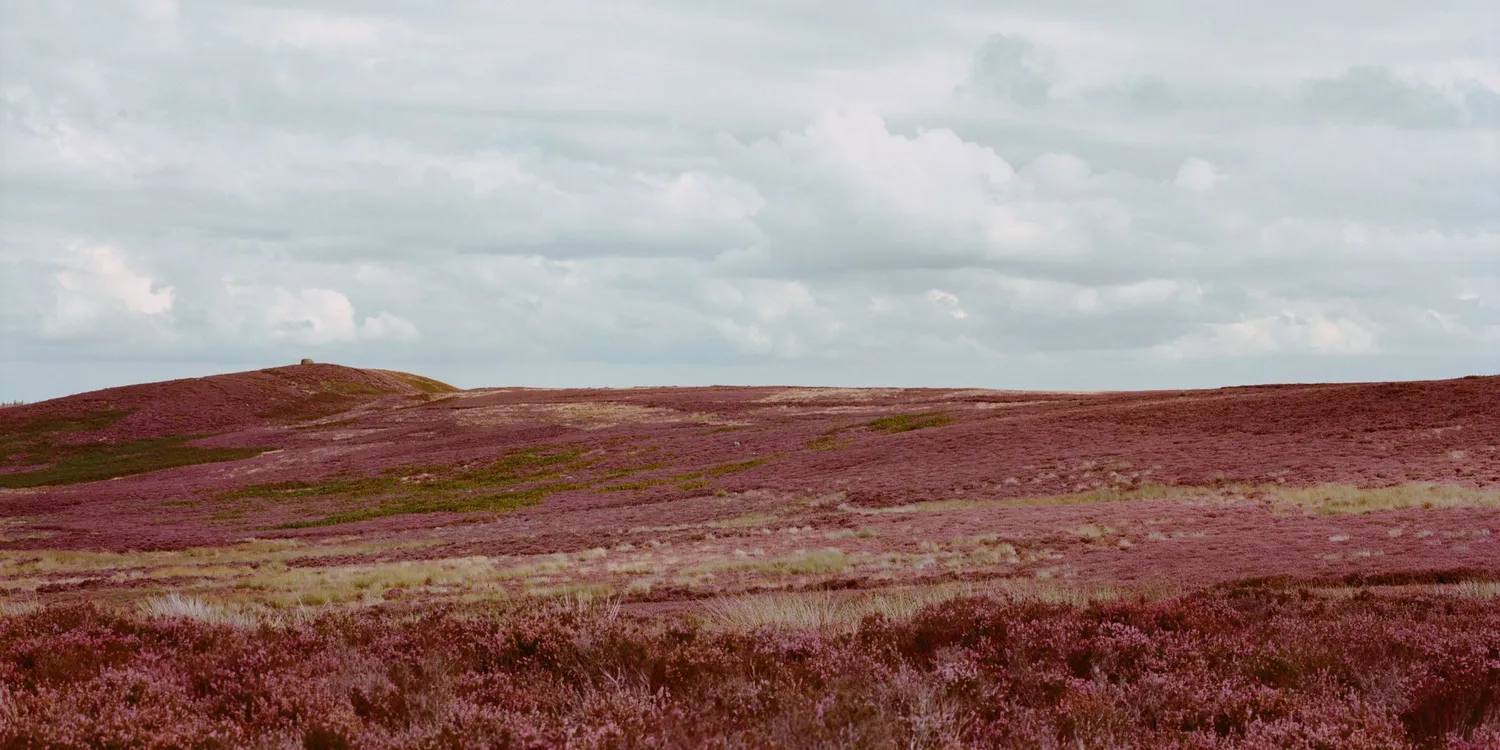
Hero Image: Denton Moor in heather (Juliet Klottrup, Restoration of Denton Moor, Yorkshire. Copyright Juliet Klottrup, 20250020)
Juliet: Listening to the Living Landscape
When photographer Juliet Klottrup first stepped onto Denton Moor, she didn’t yet know that the project she began in 2023 would become an ongoing relationship - one rooted in attention, collaboration, and a deepening understanding of peatland restoration. Although her initial documentation centred on Denton Moor, her work has continued to evolve alongside the Yorkshire Peat Partnership, who have welcomed her into restored and protected landscapes across the region.
What makes this collaboration so distinctive, she explains, is the freedom she is given to explore the moors beyond the boundaries of data. “They give me the freedom to capture images as an expression of the landscape where data and science stops; colour, interpretation and understanding begins.”
A phrase she once heard during a community poetry workshop has stayed with her: “Peat is the landscape’s memory.” Juliet sees her images as part of that memory - “a real‑time offering” created as the peatlands recover and their value becomes more widely understood. Her long‑term documentation, she says, is a “living recording”.
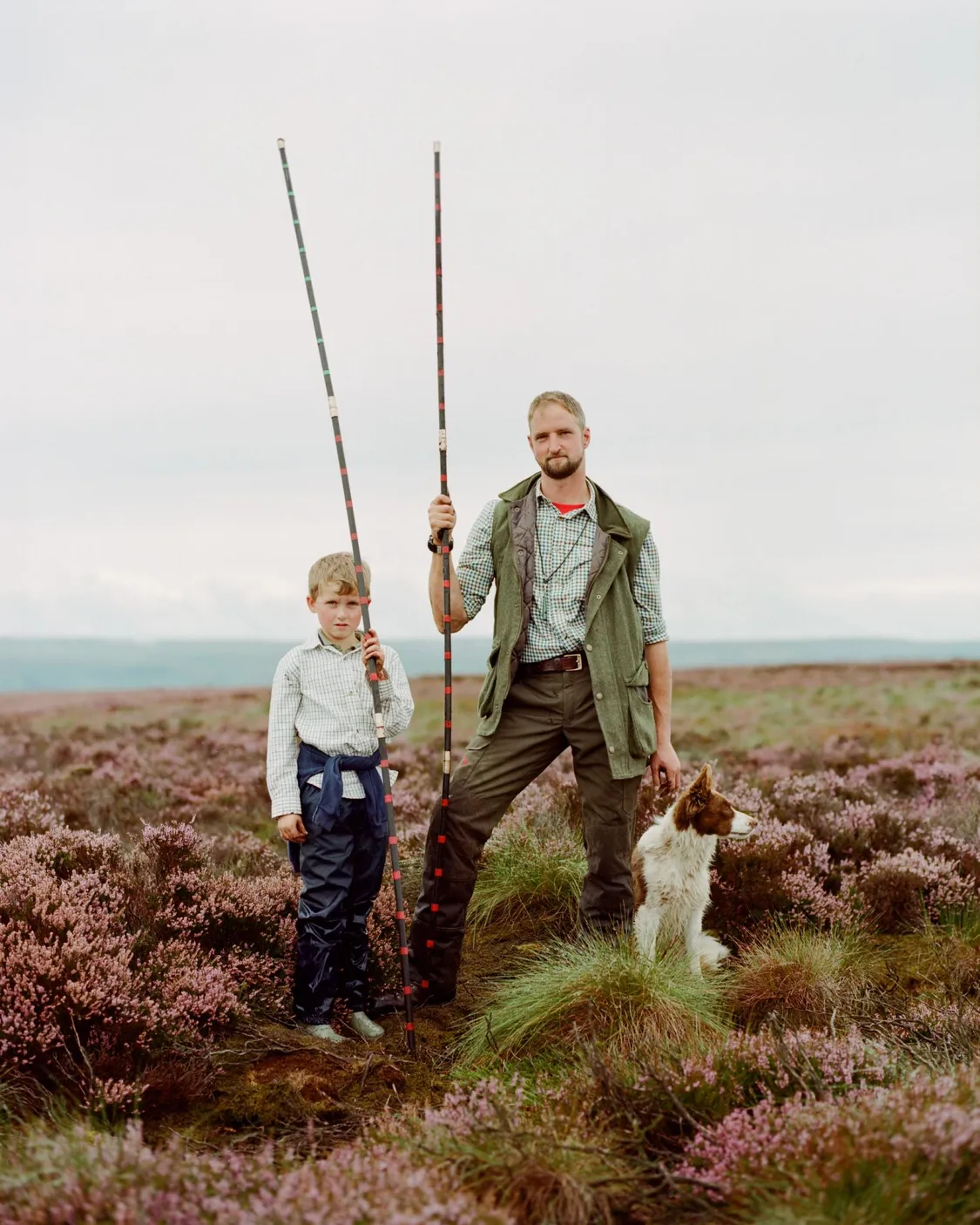
Image 1: Win and Bernie with their dog Nell. The poles they’re holding are used to measure the depth of the peat bogs. (Juliet Klottrup, Restoration of Denton Moor, Yorkshire. Copyright Juliet Klottrup, 20250017)
A Practice Built on Paying Attention
Art can open up new ways of seeing and engaging with the landscape. For Juliet, working alongside people who bring such careful, embodied knowledge to the peatlands gave her new lenses through which to view these vast, layered environments, deepening both her process and her understanding of the living landscape.
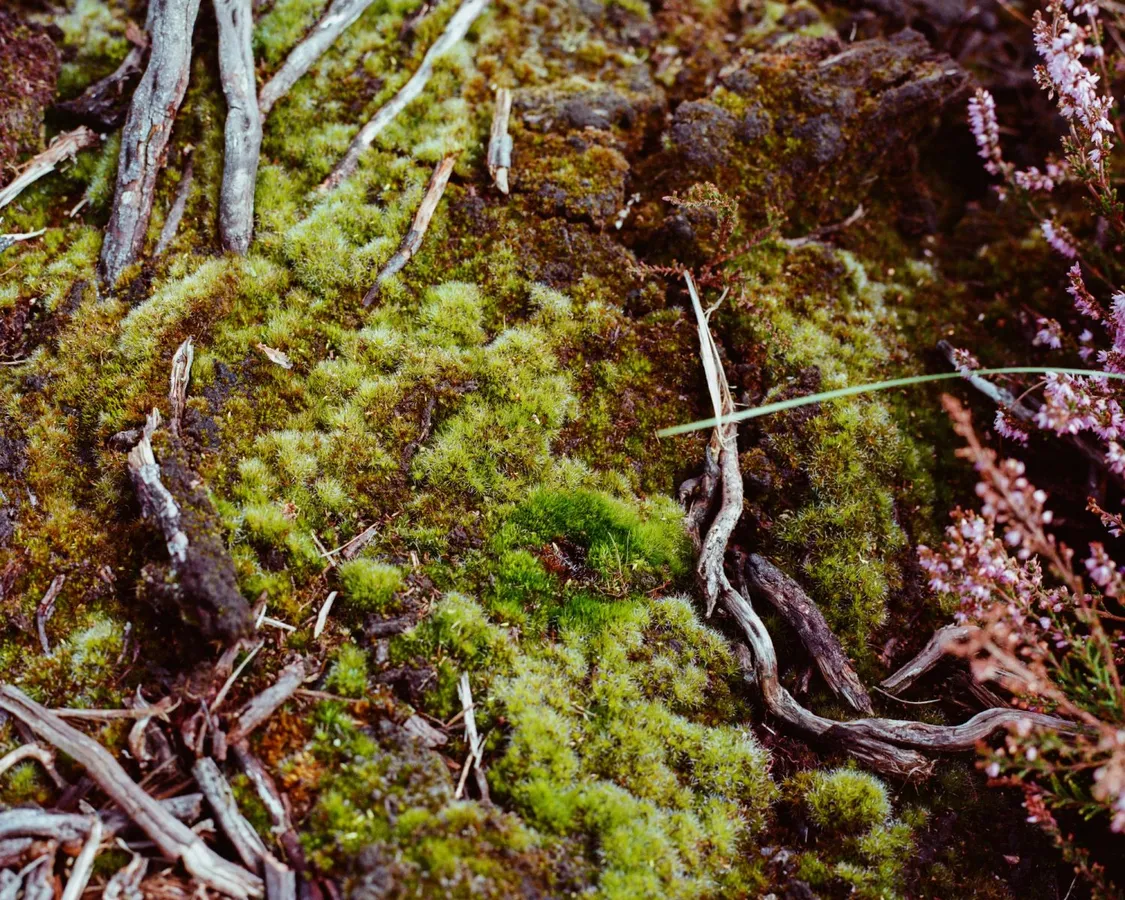
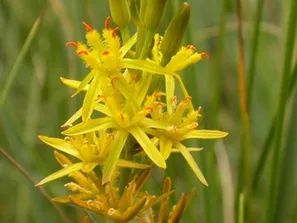
Image 2: Vegetation survey, Campylopus introflexus (Juliet Klottrup, Restoration of Denton Moor, Yorkshire. Copyright Juliet Klottrup, 20250018)
Observing walkover bird surveys, ground-truthing, and drawing as a form of data collection, shifted how Juliet looked at the moors at different scales. From the micro world of mosses examined through a magnifying glass to the broad sweep of horizons traced in hand‑drawn shadow studies, each method revealed a different dimension.
“They offered an expansive way of understanding the land” she says. “Each became its own language for translating the natural world.”
“Ultimately, these photographs are a response to listening, co-creating and not just documenting.”
Learning a Landscape Over Time
Repeated visits to the reserve taught Juliet to read the land’s subtle shifts. She learned the lines of the horizon, the way the moor wore each season, and how restoration work reshaped its undulations. Unofficial waypoints became anchors—places she returned to again and again to take photographs.
“Time is always important when learning about a new landscape,” she reflects. “To pay close attention you need lots of it.”
Her earlier project, Moss of Many Layers, documenting a vast peatland under restoration in Cumbria, has made her familiar with these landscapes and the slow, attentive work of restoration. She describes her practice as “decoding them beyond data and through art.”
People, Place, and the Stories That Bind Them
Juliet’s work consistently explores the relationships between communities, cultural heritage, landscapes, and the natural world—and this project brings those threads together with particular clarity.
“It always felt important to bring the human story to the forefront,” she says. Her images are shaped by the experiences of those who live alongside the peatlands, whether they know the landscape intimately or are encountering it for the first time.
Learning a landscape, she notes, can be disorienting at first. But bringing people together—across disciplines, backgrounds, and levels of familiarity—creates a shared space of curiosity and connection. These encounters have been “incredibly inspiring,” and she hopes the resulting series invites audiences into that same sense of discovery.
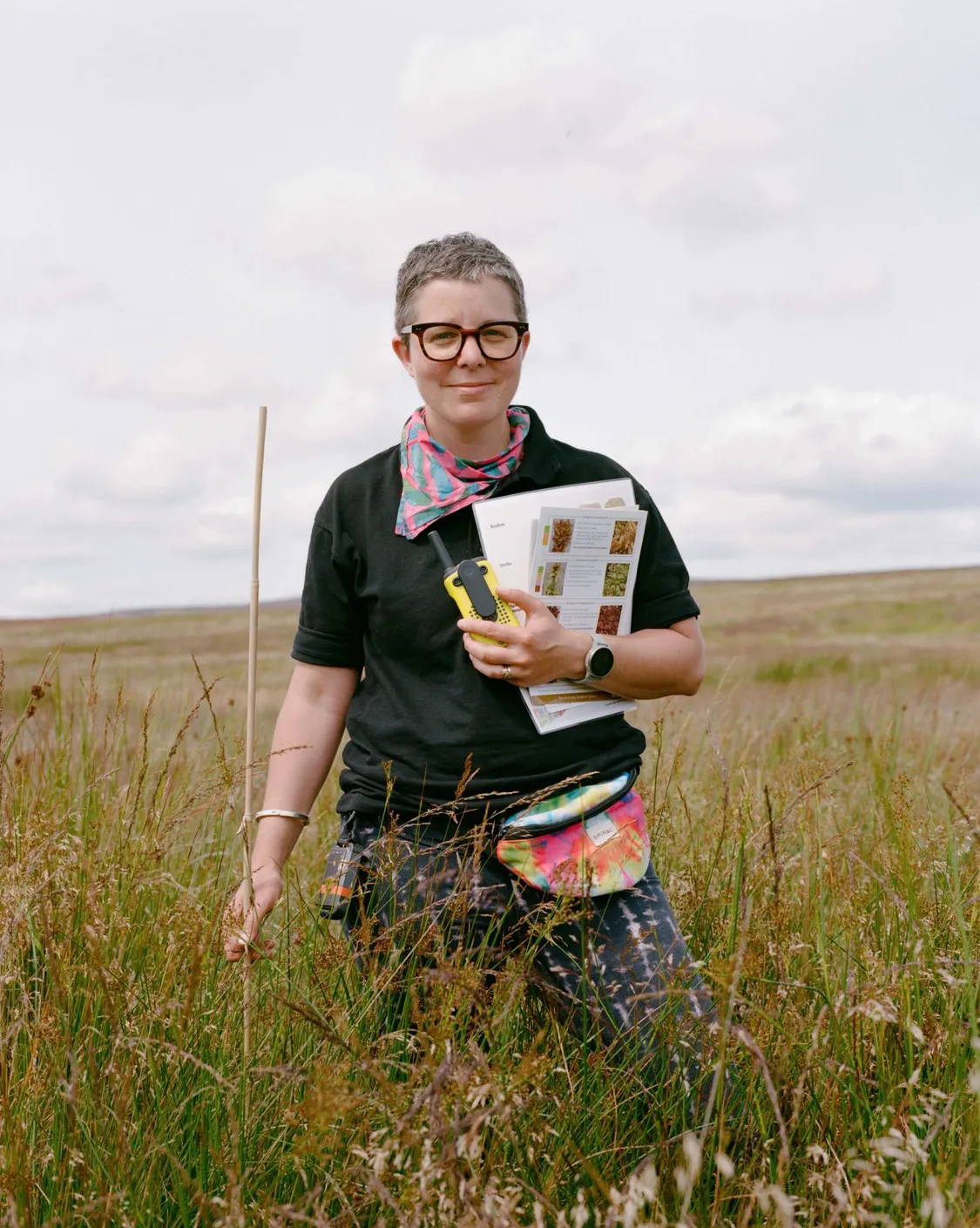
Image 3: The science is important, but so are people’s personal responses to the landscape”, said Yorkshire Peat Partnership’s engagement officer, Lucy Lee. (Juliet Klottrup, Restoration of Denton Moor, Yorkshire. Copyright Juliet Klottrup, 20250012)
“I hope the series helps audiences feel part of that evolving story—invited to look closely, listen deeply and recognise the living, changing nature of these places.”
Juliet Klottrup is an award-winning British visual artist based in the North of England, working across photography, filmmaking, and painting. This interview is based on Juliet’s commissioned work for the Yorkshire Peat Partnership. You can view further photographs from this project as well as her wider portfolio of work on her website. You can also follow Juliet in instagram to keep up to date with her work.