09 Feb 2026
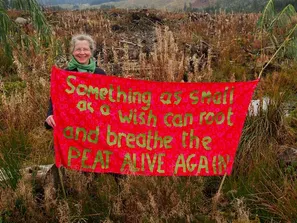
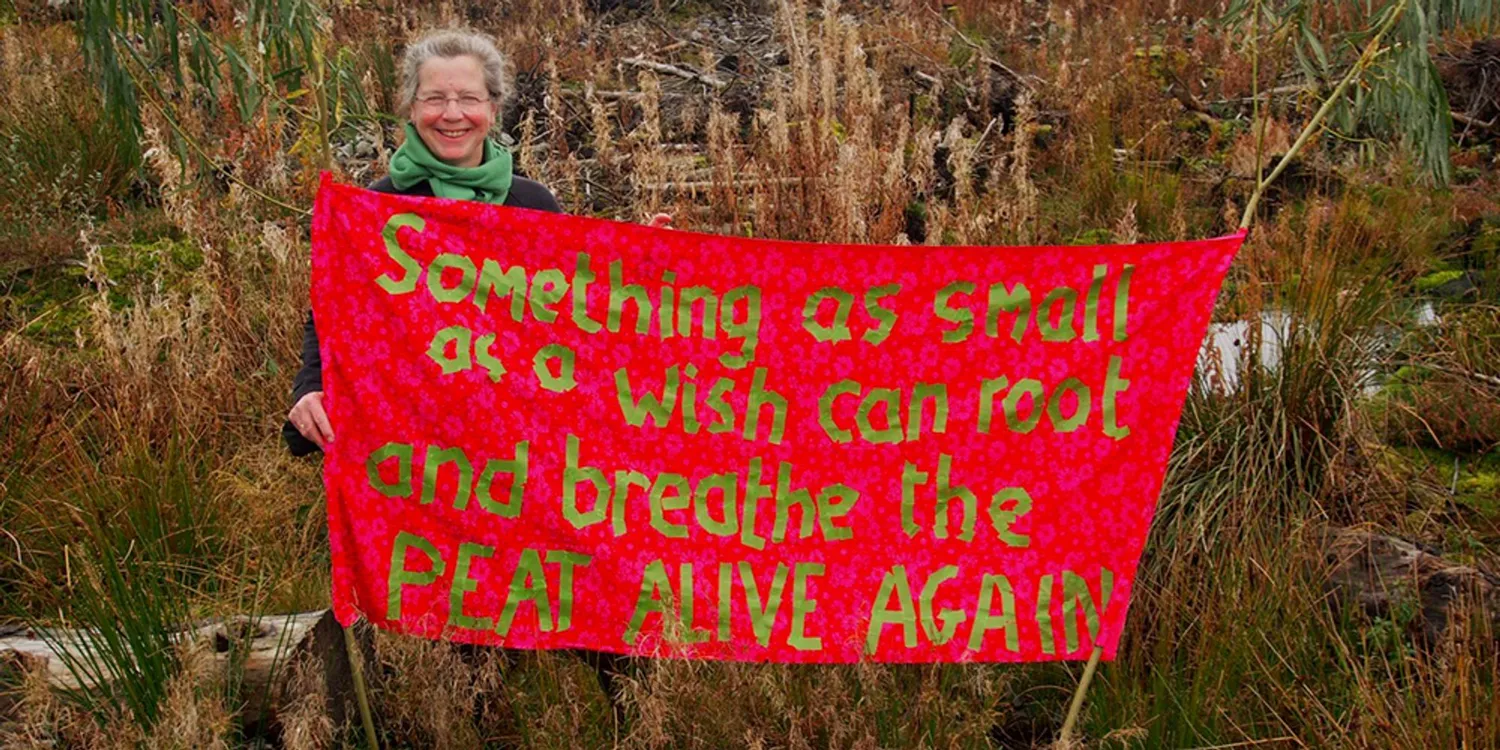
Communities are critical to peatland restoration, transforming projects from purely ecological efforts into initiatives that provide social and economic benefits, fostering a legacy for sustained care. For environmental artist Kate Foster, these communities - both in-person and online - are central to her work.
Kate has focused on peatlands for the last ten years, beginning her project Peat Cultures to work with peatland restoration experts at the Crichton Carbon Centre in south west Scotland. This was part of the Galloway Glens Landscape Partnership programme and piloted the scheme Peatland Connections. The emphasis of this scheme was on the local benefits of peatland restoration and community engagement.
As an artist living in Southern Scotland, Kate is inspired by walking in the peaty uplands and her project has taught her to treasure the wetlands between the hills, ‘the mosses and the flows’. Peatlands are culturally important as well as vital ecologically, and she feels herself to be part of a movement re-imagining connections people can make to peatlands.
Kate also spends part of her time each year in the Netherlands, a connection that began with an Erasmus+ placement in Wageningen University in 2020. She is an older member of the youth-led collective RE-PEAT, which began in the Netherlands with projects across Europe. Within RE-PEAT, Kate thrives on intergenerational exchanges and collective advocacy for the protection of peatlands.
Mending the Blanket
One of Kate Foster’s works, Mending the Blanket, seeks to draw attention to the vital restoration work of peatlands. Set in the remote valley of Gameshope in the Southern Uplands of Scotland, Kate saw first-hand the restoration being undertaken by those repairing Crunklie Moss blanket bog. This immersive experience directly informed the artworks that followed.
“Overall, I think the remoteness of peat restoration still makes it invisible to many people and this was an attempt to honour the work done, often by women, really committed to setting up restoration projects, and the people developing skills to do this.”
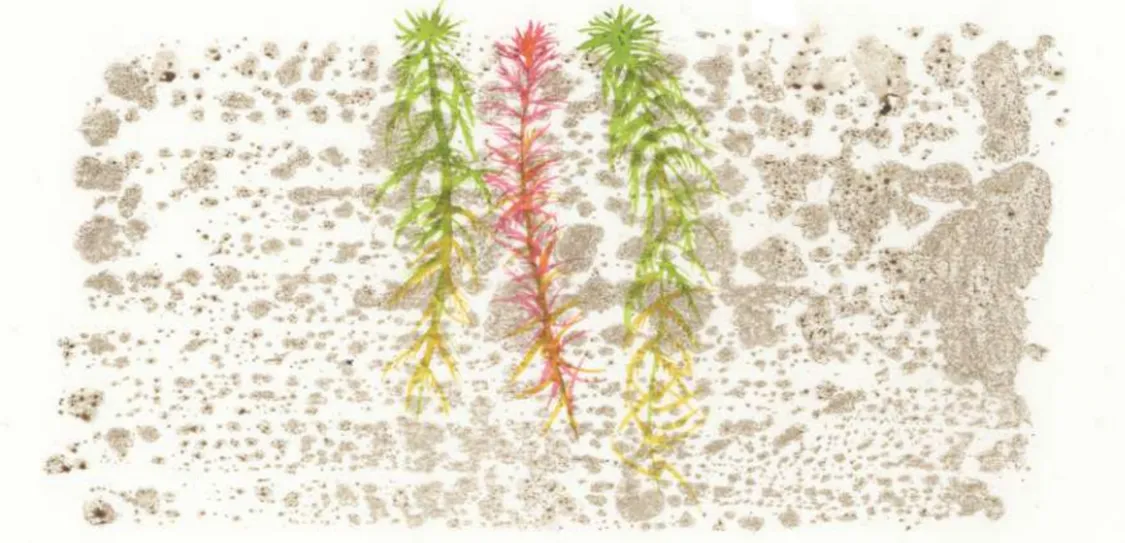
Image 1: Kate Foster ‘Bog mosses make layers of carbon-rich peat from air and rainwater’, Mending the Blanket (2019)
The works became postcards, a booklet, and a short film. The Mending the Blanket booklet documents how peatbogs are made and degraded, as well as highlighting the dangers of bare peat, which oxidises and releases carbon dioxide. The restoration work in Gameshope was restoring the living green surface layer. Kate was given a handful of ancient peat that was being remoulded to prevent further erosion. As a one-off, she used this handful to press a few unique prints. She has since reconsidered using peat as a material, feeling strongly peat should be left in the ground.
The short film and zine images were produced with pantea who has a shared interest in wetlands. For one week following the publication of this article, Kate and pantea have made the film publicly available via this link. For a viewing at higher resolution please contact Kate Foster.
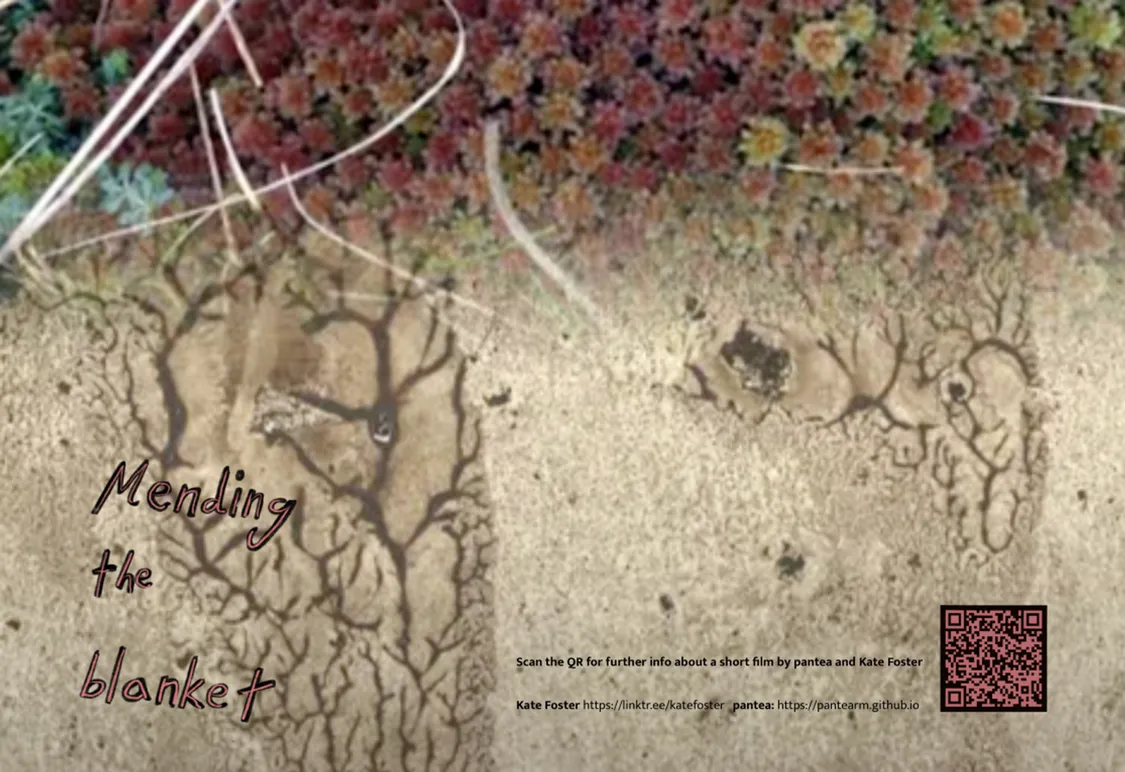
Image 2: Mending the Blanket, short film zine excerpt (2023), Kate Foster and pantea
“We made this short, animated film to show how wetlands are now being valued across the world. An example from a remote part of Southern Scotland pays tribute to the commitment needed to restore a ‘blanket' peatbog. Our Iranian-Scottish creative collaboration seeks to find new ways to say why wetlands benefit people, wildlife and landscape.”
Kate observed that there was less documentation of peatland restoration at the time of the project in 2020. She is pleased to see the increase in artists and restoration teams documenting this vital work, helping to increase awareness of this critical ecosystem and the efforts to repair and protect it.
International Perspectives
Kate’s knowledge of peatland projects and communities is extensive. She celebrated the innovative way RE-PEAT launched its network with Peat Fest in 2020, featuring a 24-hour program of facilitated sessions over Zoom that connected projects across the world, including a presentation from Kate and pantea.
This event was a turning point for Kate. She was invigorated by the networking power of these students coming together, and RE-PEAT's work demonstrated to her the power of online networks to create collective advocacy for healthy peatlands. Kate also highlighted the Venice Agreement and their Sensing Peat project, which maintains an international network of people committed to working in their local peatlands while fostering global connection and resonance.
For some, peatland restoration is driven by local concerns such as flood management; for others, a global perspective is essential. Kate notes that “restoring wetlands is a technical issue but also a cultural challenge prompting collaborative responsibility by artists, researchers, and advocacy groups”.
Community, Art, and Peatlands
In a world subject to intensifying extraction, the shared purpose found among those working on peatlands is priceless to Kate. In addition to the experience of peatlands themselves - the sights, the sounds, the curlew’s call - Kate values the relationships and collaboration with others who share her commitment to protecting these landscapes. This shared vision continues to inspire her work.
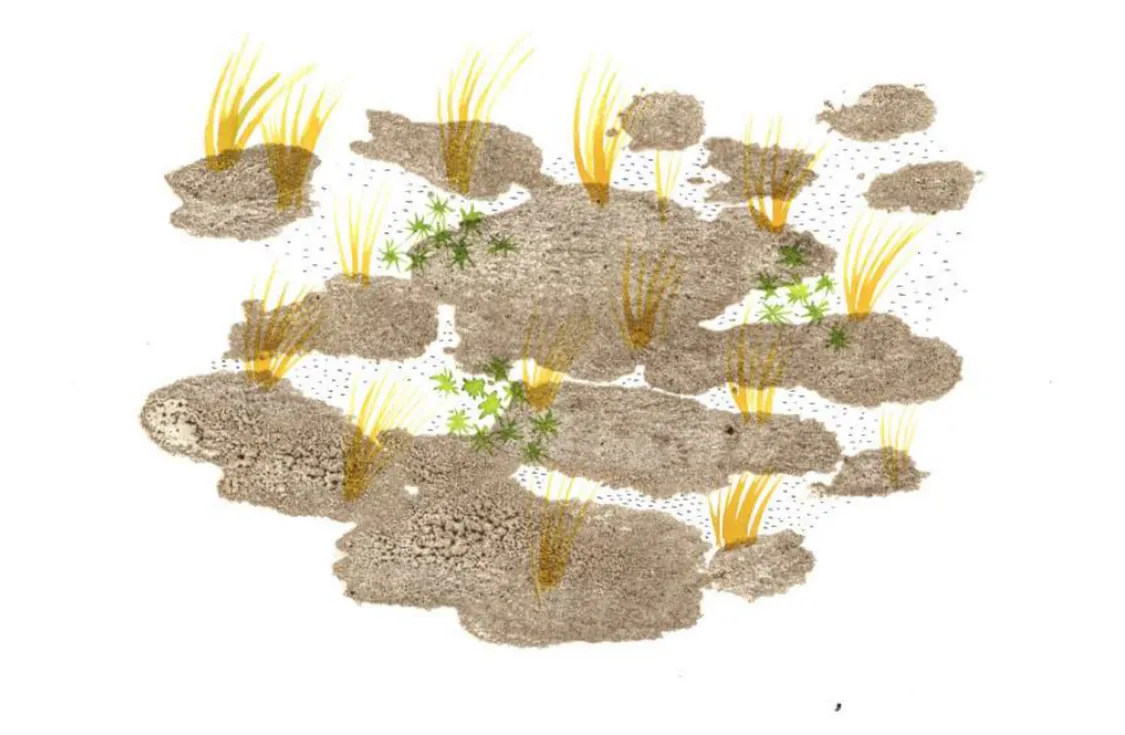
Image 3: Kate Foster ‘A new surface, with the hope of bog moss taking hold again', Mending the Blanket (2019)
When asked about the importance of the arts in peatland restoration, Kate emphasised the need for collective and interdisciplinary action. To explain what her ideals for creative work are, she adapted a quote from a report about valuing art and ecology. She believes artists can make a special contribution in partnership with others:
“Together, we can offer a distinct way of understanding the world and ourselves.
Together we can provoke; unsettle norms and challenge prevailing wisdoms.
Together we can be political, illuminate problems and expose values and choices.
Together we can educate, inspire and persuade.
Together we can open up new perspectives through imagination.
Together we can live with uncomfortable truths.
Together we can adapt to new realities.”
Looking to the future
This winter, Kate is returning to studio work, developing ideas into artists’ books and zines, including developing themes via glove puppets —Wisp and Bog Woman—which allow her to explore alter egos such as apathy, denial, and complicity, and to examine the influence of romanticism on how people relate to climate change and nature.
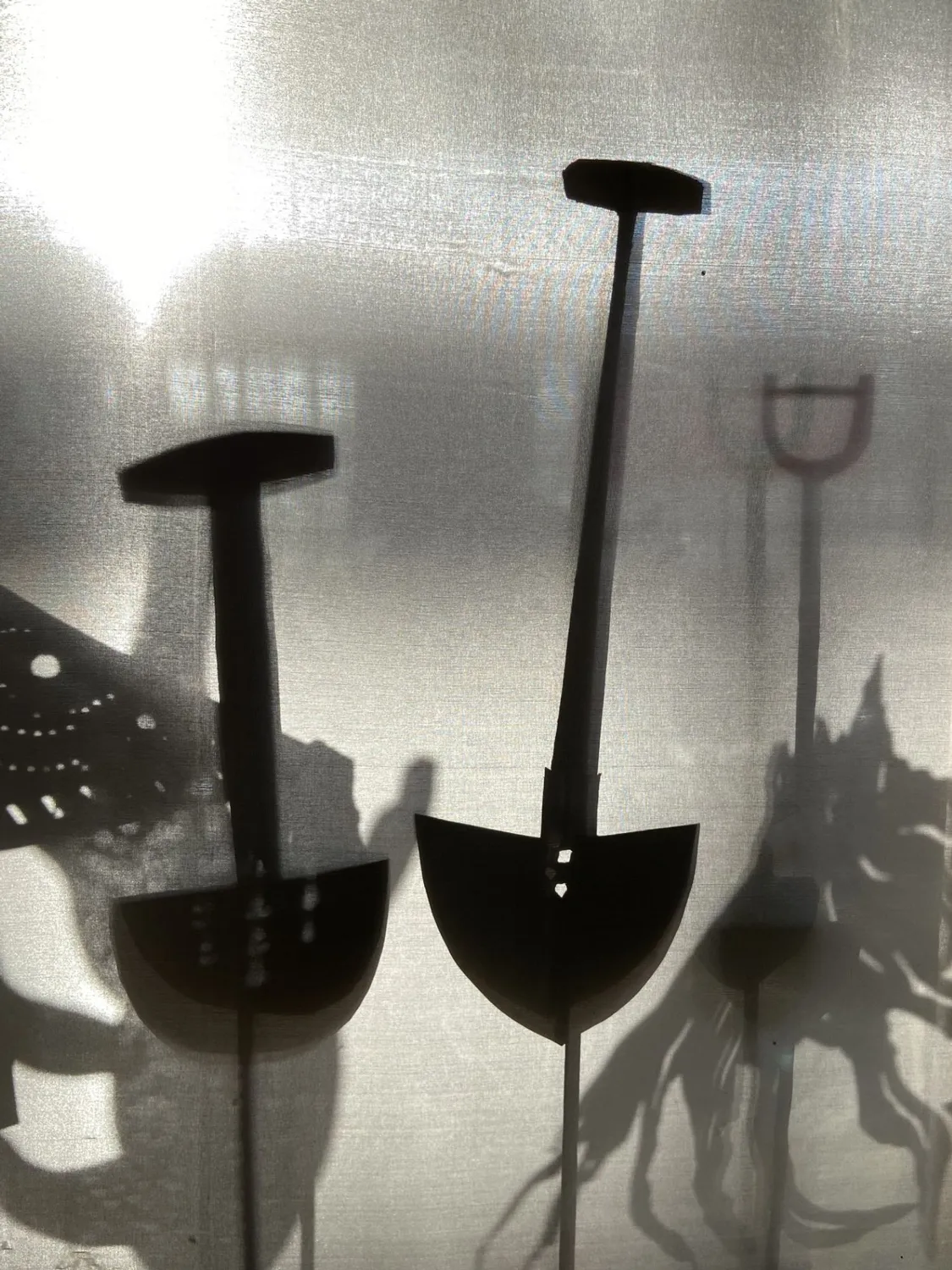
Image 4: Peatland Figures by Kate Foster installed at RE-PEAT’s 'Limbo' exhibition in De Proef, NL (2025)
She is also exploring how people relate to and represent soil creatures for the International Symposium on Earthworm Ecology, while continuing her involvement with RE-PEAT. Kate is inspired by recent participation in RE-PEAT’s collective exhibition Limbo which considered peatlands as terrains in flux and showed the work of eighteen artists and collectives.
Kate is also looking forward to a summer spent walking, drawing, and listening on peatlands. Her work continues to show how art can deepen our connection to these landscapes, helping communities recognise their value, and imagine new futures for them. You can follow her work on her blog, Peat Cultures.