19 Feb 2026
Meet the Climate Champions powering community action for healthier peatlands. With this campaign, we aim to share their stories, showcase their work and highlight co-creation and collaboration efforts from across the country that shape lasting climate impact!
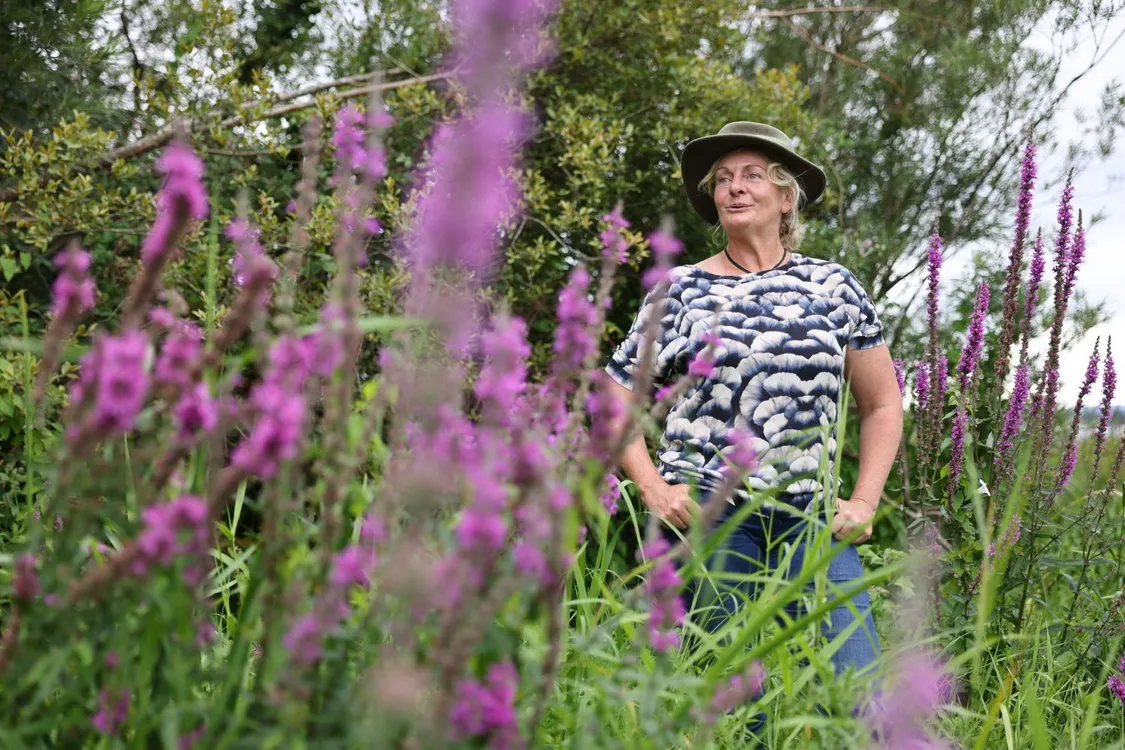
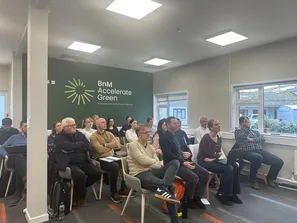
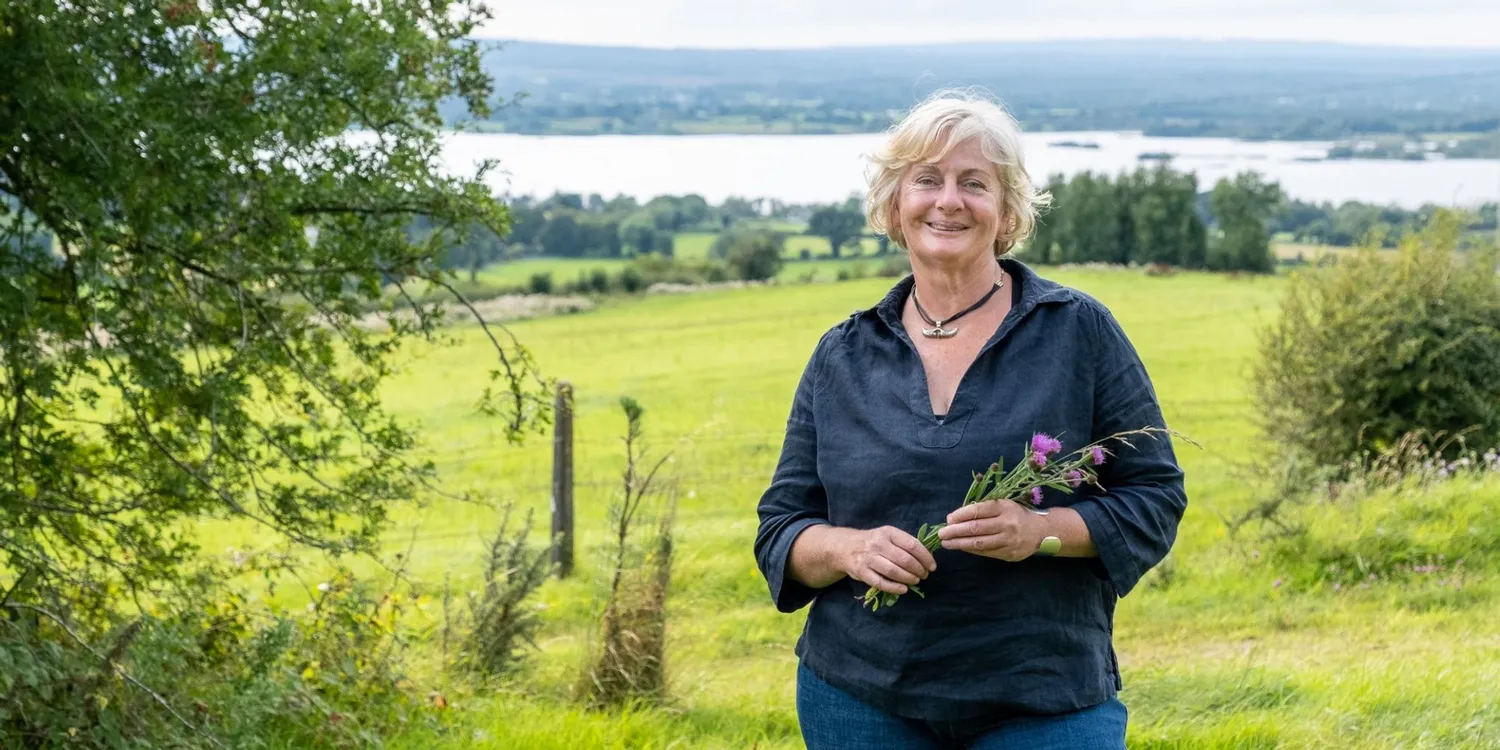
We spoke to Ailbhe Gerrard, a farmer from the shores of Lough Derg, Tipperary, and one of three attendees who were funded by the Peatlands & People project to attend the Leaders For Nature Programme. Developed in partnership with Leave No Trace Ireland, Common Purpose Ireland, and Native Events, the programme is designed to empower emerging leaders to address Ireland’s most pressing environmental challenges and to explore actionable solutions for nature recovery. The Peatlands and People project has established synergies with the Leaders for Nature programme to support Climate Champions and stimulate climate-positive behaviour change.
Farming at Lough Derg
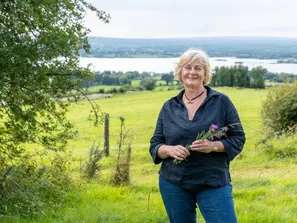
In the midst of beautiful County Tipperary, Ailbhe’s sustainable Brookfield Farm is located in picturesque countryside, rolling down to the shores of Lough Derg. Lough Derg SAC is the largest lake connected to the river Shannon and deeply affected by everything that has flowed into the river upstream, including impacts of the peatlands further upstream, which have been impacted by historical drainage, peat extraction and agricultural conversion. In a recent Irish Times article, journalist Ella McSweeney addresses the issue, highlighting that “Lough Derg has been so reshaped by pollution that its original character is almost impossible to discern”.
After buying the 35-hectare farm in 2010, Ailbhe completed an Msc in Organic Farming in Scotland and started converting the farm bit by bit. Originally a tillage farm, the farm had been leased to grow barley and hadn’t been looked after for 40 years when Ailbhe bought it. With deep care and over fifteen years, Ailbhe turned it into a bustling organic farm with a small flock of organic sheep, several hives of native Irish black honeybees, fruit orchards, and a number of interesting pilots growing organic old grains like Galway land wheat and a Danish old variety of rye. She has a deep interest in agriculture, creativity, regeneration, and re-establishing the broken food production chain. For instance, she runs a beehive share programme that allows people to buy a share of her beehive in exchange for a share of the honey produced, and a visit to her farm for a day of celebration once a year.
Brookfield Farm also hosts native Irish woodlands and implements the ACRES agri-environment measures, enhancing biodiversity through measures like arable margins, bee boxes, bird and bat boxes and wild bird winter forage.
Peatlands & People: In your line of work, what are some key challenges you struggle with that you were hoping to address with the “Leaders for Nature” programme?
Ailbhe: My farming practice is grounded in the understanding that my land is also a shared habitat for animals, insects, birds, and fish. What I do influences the ecosystem around me. The same is true for other farms in the area. That’s why I find it especially challenging when nearby farming practices don’t align with this perspective, and you see, for instance, slurry being spread outside the season or entering rivers. This is a structural problem that goes beyond just my farm.
I think EU policy and legislation have already helped Ireland in pointing out where we are polluting waters and causing too many emissions. What is important now is to help Irish farmers - because we own most of the land in Ireland - to be gentler on the environment. A key challenge connected to this for farmers in Ireland is the tension between earning a farm income and not damaging the environmental ecosystem on which we depend. And also having enough knowledge to actually start helping repair it.
The Leaders for Nature programme is helping to open the discussion on some of these challenges with like-minded people from different sectors, who face similar challenges.
Peatlands and People: How did you hear about the Leaders for Nature Programme and what motivated you to join it?
Ailbhe: I've been running a programme on the farm called “Field Exchange” for the past three years, funded by Creative Ireland. The CEO of Creative Ireland linked me to Dara Connolly, the head of Common Purpose, who runs the Leaders for Nature Programme. Dara actually rang me and offered me a spot on the course. I was very thrilled to be invited.
Peatlands and People: What was your favourite part about the programme so far?
Ailbhe: We haven't quite completed the programme yet, but we’ve been doing a module in storytelling, which has been really exciting. It introduced us to the art of bringing audiences with you, usually by sharing elements of your personal motivation and history. Building on that personal anecdote, the idea is to introduce the audience to a common challenge faced by all people in the room and opening the discussion to actions that can be taken together as a group to find a solution. I have been selected to be the storyteller of the group I'm working in, which is a great honour. On 10 February 2026, I presented a story aimed to enthuse, move and encourage the audience.
Linked to this, I've just been selected as one of three farmers in a theatre play, presenting a piece on stage about being a farmer as part of the Seen and Heard theatre festival on 15th February 2026. There will also be a short documentary about my life as a farmer and two other farmers that will be shown at the South by Southwest and the Sundance Film Festivals. So that's really exciting.
Peatlands & People: Did the Leaders for Nature programme provide any actionable insights you plan to apply in your current or future work?
Ailbhe: One thing that really struck me with this programme is that there are so many people who are really committed to nature across a whole range of different sectors and workplaces. Some people work on county councils, or with public bodies like the NPWS, and Failte Ireland. Tourism being part of my farm enterprises, I’m really interested in helping to encourage the sustainability side of it.
“I suddenly thought, my gosh, there's a whole network here. There is a network of people who can help. It's really starting to ask the question about what we could do together, and it's giving us the time and space to discuss and work together.”
Peatlands and People: With the Peatlands and People project, we aim to empower local “Climate Champions” to drive community-led restoration in the Midlands. In your view, how does this programme support that mission?
Ailbhe: The concept of climate champions is a really good one, as long as they are well selected and well supported. I also think running these programmes over a longer time period is important.
For instance, I'm part of the Farming for Nature Ambassador Network, and I think it's a great system. An Taisce also runs the Climate Ambassador programme, which I participated in a couple of years ago and won an award for outstanding achievement for my work with farmers and artists. Back then, we had 11 very committed farmers join us, working with artists and with musicians, developing crafts like dry stone walling, and weaving, just to help rethink how creativity can work hand-in-hand with agriculture. In the long-term, that also impacts their own work as farmers, and their perception about climate and sustainability. The current round of funding is now complete, but I am about to publish a book about the programme, which is going to help ensure legacy and dissemination of the project. The Leaders for Nature programme supports and encourages those types of activities. The nice thing about this programme specifically is that it’s very much cross-sectional, bringing together a wide range of people and opening up new networks.
Peatlands and People: Can you tell us a story that gives you hope for the future of nature in Ireland?
Ailbhe: I have recently been invited to a meeting organised by fishermen and anglers on Lough Derg to discuss the future of the lake. Pollution in the Shannon River system and Lough Derg is a complex issue that requires a fully cross-sectoral approach and strong collaboration. This meeting gives me real hope, as all stakeholders have been invited to work together on solutions.
Over recent decades, there have been efforts to reduce pollution in the lake. However, despite draining one-third of Ireland, the Shannon River system was not included among the priority areas of pollution under Ireland’s Nitrates Derogation, unlike rivers such as the Barrow, Slaney and Lee. These priority catchments were identified because of high nitrogen concentrations threatening water quality. I was disappointed to see this, as the Shannon urgently needs support to address its pollution challenges. That is why it is so encouraging to see such a broad range of people coming together to protect Lough Derg.
Peatlands and People: Any advice you would give to other aspiring climate champions?
Ailbhe: Join networks, find your tribe. Don't try to do it all by yourself. Be aware that you’ll be in this for the long haul; it's decades, so don't burn yourself out.
“Most importantly, stay close to nature yourself. Don't get stuck in an office. Get out into nature, go swimming, roll in grass and grow something yourself if you can, because that will keep you grounded.”